
East Point Truck Accident Lawyer
Any automobile accident is dangerous, but when a semi-truck or 18-wheeler is involved, the results can be catastrophic. We depend on truck drivers as a large amount of our goods and supplies are delivered by them. Most truck drivers exercise caution, but they’re still human, and accidents can occur. When an accident happens due to negligence or recklessness, you have every right to call our Council & Associates, LLC law firm. Speak with our East Point, GA truck accident lawyer today!
East Point, GA Truck Accident Lawyer
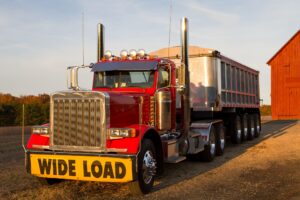 Truck accidents happen, especially when many truckers are expected to work long shifts without a lot of breaks. It’s not uncommon for some truck drivers to drive hundreds of miles without any breaks within a 10+ hour shift. Combined with other concerns like weather or road conditions—especially in rural areas—an accident becomes more likely to happen. Like all drivers, truckers can become distracted as well.
Truck accidents can often be more complicated than other automobile accidents due to two main factors. The first factor is that the damage caused in a truck accident can sometimes be more severe than that of a car crash. The sheer force and weight of a truck can mean catastrophic injuries, which can take longer to document.
The other factor that can make truck accidents challenging is the question of liability. In a typical car crash, usually just one party and their insurance company is liable. However, in a trucking accident, the driver may not be the only one liable. Their employer can be held liable, but so can the truck manufacturer if a problem like a defective part is discovered. If the trucker is employed by the government, then the government itself might be liable.
Why Trucking Accident Cases Require Experience
Our East Point truck accident lawyers understand that these types of crashes require a level of finesse that may not be present in other crashes. We understand the additional work that may need to be done to prove liability.
- Our team brings over 20 years of experience. During our over two decades of practice, we’ve successfully helped victims and their families receive millions in compensation. We always fight for the maximum compensation, and we’re not afraid to apply legal pressure when necessary.
- Our founder, Lashonda Council Rogers, helps clients facing life-altering injuries and injustices. She has been noted for her work, receiving the Super Lawyers Rising Star and the Nation’s Best Advocates: 40 Lawyers Under 40.
- Our many wins include truck accidents. We successfully secured $3.9 million in a commercial truck accident and another $1.75 million in a tractor-trailer accident.
- We’re always available to take your call, and we’re proud to provide a free case evaluation where we’ll learn your story and provide you with legal options.
Truck accidents are fatal, but legal help is available when you reach out to our Council & Associates, LLC law firm today. Work with our East Point truck accident lawyer to receive the compensation and justice you deserve!
Truck Accident Lawyer East Point, GA
 If you have been injured in a commercial truck crash in East Point, you may be facing severe injuries, a long recovery, mounting medical expenses, a destroyed vehicle, and a trucking company’s insurance team that began working the file within hours of the collision. Our East Point, GA truck accident lawyer at Council & Associates can explain how Georgia and federal law apply to your case and what categories of compensation may be available to you.
Our firm has represented injury victims throughout south Fulton County and across Georgia for more than 20 years. We understand how trucking companies and their insurers approach these claims, including the rapid-response teams deployed to crash scenes, the tactics used to dispute causation, and the preservation battles that often determine whether critical evidence remains available. A truck accident case involves far more than the crash itself. It requires working knowledge of the Federal Motor Carrier Safety Regulations, commercial insurance layers, electronic logging device data, and the employment relationships that can expand liability beyond the driver behind the wheel.
Contact us for a free case review. No fees are owed unless we recover compensation on your behalf.
Why Choose Council & Associates for Truck Accident Cases in East Point, GA?
 Over Two Decades of Commercial Truck Experience
Our firm has handled commercial trucking cases throughout Georgia for more than two decades. Founder Lashonda Council-Rogers has been recognized among the Top 10 Georgia Trucking Lawyers by the National Trial Lawyers organization. Our personal injury lawyer in East Point, GA handles a wide range of motor vehicle matters, but trucking cases carry distinct evidentiary demands that only a firm with substantial commercial crash experience is equipped to meet.
Proven Case Results
Our firm has secured millions of dollars recovered through personal injury, trucking, and daycare abuse matters. Our past results include a $3.9 million recovery in a commercial truck accident, a $1.75 million recovery in a tractor trailer case, and a $1 million recovery in a separate commercial truck matter. Every client receives the same level of care and attention, regardless of the size of the claim.
Contingency Fee Structure
Our cases are accepted on a contingency fee basis. There are no upfront costs, no hourly billing, and no retainer. Clients pay a percentage of the recovery only if the case is settled or won. If no compensation is obtained, no fee is owed.
Attorneys With Deep Roots in This Community
Our founder, Lashonda Council-Rogers, is admitted to practice in Georgia and South Carolina. She has been recognized as a Super Lawyer, named an “Attorney to Watch” by Attorney at Law Magazine, and listed among the Top 10 Georgia Trucking Lawyers by the National Trial Lawyers. She serves on the executive board of the Gate City Bar Association and holds active memberships with the Atlanta Bar Association, the Georgia Trial Lawyers Association, the Georgia Association of Black Women Attorneys, and the American Bar Association. Attorney Wayne Washington is also admitted to the Georgia bar and handles personal injury matters for the firm.
The following testimonial reflects the experience of a recent client:
⭐⭐⭐⭐⭐
“Council & Associates provided EXCELLENT service and attention to my case. They were quick to respond to my emails and calls, kept me informed of every detail of my case, and never made me feel like I was a burden with all of my questions. I was referred by another client who shared the same sentiments as my experience. If I had the option to give 10 stars I would! I HIGHLY recommend!!!!!” – K. Dossett
Additional reviews are available on our Google Business Profile.
Types of Truck Accident Cases We Handle in East Point
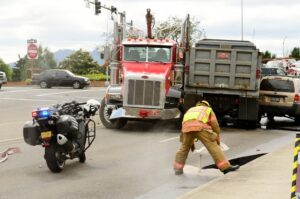 Commercial truck collisions arise from a range of driver errors, equipment failures, and company-level safety lapses. The matters below represent the situations our firm most frequently handles for clients in the East Point area.
- Tractor trailer and 18-wheeler crashes. Long-haul combination vehicles produce the most severe injuries on Georgia roads. Interstate 285 and the approaches to Hartsfield-Jackson airport see significant combination vehicle traffic, and a crash at highway speeds frequently involves multiple passenger vehicles.
- Rear-end collisions by commercial vehicles. The stopping distance of a loaded tractor trailer is substantially longer than that of a passenger car. A driver who follows too closely or who fails to anticipate a traffic slowdown produces catastrophic rear-end impacts.
- Underride and override crashes. A passenger vehicle can slide under the side or rear of a trailer in an underride collision, causing fatal injuries even at moderate speeds. Override crashes occur when the truck rides over a smaller vehicle. Both configurations produce injuries of exceptional severity.
- Jackknife and rollover incidents. Braking imbalance, sudden evasive maneuvers, and overloaded trailers contribute to jackknifing. Rollover crashes often occur on highway ramps and curves taken at excessive speed.
- Cargo-related crashes. Improperly loaded, overloaded, or unsecured cargo can shift in transit, cause the driver to lose control, or fall from the vehicle into traffic. Responsibility may rest with the driver, the carrier, the shipper, or the loading contractor.
- Hours-of-service violations and fatigued driving. Federal regulations cap driving hours for commercial drivers. Violations of those rules are common and frequently cited in serious crashes. Electronic logging device records and dispatch data establish the driver’s duty status.
- Drug or alcohol impaired truck drivers. Federal regulations require drug and alcohol testing after any qualifying crash. A positive test or a refusal can support both compensatory and punitive damages claims.
- Maintenance and equipment failure cases. Brake failure, tire blowouts, steering defects, and lighting failures often reflect skipped inspections or inadequate maintenance. Responsibility may extend beyond the driver to the carrier and the maintenance contractor.
- Delivery truck and local carrier crashes. Box trucks, dump trucks, and local delivery vehicles operate heavily in the East Point commercial corridors. These smaller commercial vehicles still produce serious injury crashes and still trigger commercial insurance analysis.
- Crashes involving other commercial motor vehicle configurations. When a truck crash also involves multiple passenger vehicles, liability and coverage questions become significantly more complex.
- Motorcycle and rider injuries in truck crashes. Riders struck by trucks face a disproportionate rate of catastrophic injury. Our motorcycle accident attorney addresses the rider-blame narratives that trucking insurers routinely advance.
- Fatal truck crashes. Truck crashes produce a disproportionate share of roadway fatalities. When a crash results in death, surviving family members may pursue both a wrongful death claim and a survival action.
Each case turns on its particular facts. Our investigation examines the police report, the driver’s qualification file, hours-of-service records, electronic logging device data, maintenance and inspection records, cargo and loading documentation, and every insurance policy that may apply to the claim.
Georgia Legal Requirements for Truck Accident Cases
 Commercial trucking in Georgia is governed by a combination of state statutes and the Federal Motor Carrier Safety Regulations, commonly known as the FMCSRs. The state provisions were enacted by the Georgia General Assembly and are codified primarily in Title 40 of the Official Code of Georgia Annotated. The federal regulations are published by the Federal Motor Carrier Safety Administration and apply to any commercial motor vehicle engaged in interstate commerce.
The FMCSRs impose duties that exceed the general rules of the road. Title 49 of the Code of Federal Regulations covers hours of service, driver qualifications, drug and alcohol testing, inspection and maintenance, cargo securement, and accident reporting. A violation of any applicable regulation can support a finding of negligence per se under Georgia law.
Hours-of-service rules limit the number of consecutive hours a commercial driver may operate before mandatory rest. Electronic logging devices record the driver’s duty status in near-real time. Drug and alcohol testing is required after any crash involving a fatality, a citation to the driver with an injury requiring medical transport, or a citation with a vehicle needing to be towed.
Georgia sets motor carrier minimum insurance limits that differ from standard passenger vehicle requirements. Commercial trucks weighing more than 10,000 pounds and operating in interstate commerce must generally carry a minimum of $750,000 in liability coverage under the federal rules. Higher minimums apply to hazardous materials carriers. Georgia intrastate motor carriers hauling property are typically required to maintain $100,000 per person and $300,000 per accident in liability coverage. These limits are frequently inadequate for serious injury cases, which makes the identification of additional coverage sources a central task.
The statute of limitations for a personal injury claim in Georgia is two years from the date of injury under O.C.G.A. § 9-3-33. Property damage claims to a vehicle are governed by a four year deadline under O.C.G.A. § 9-3-32. Claims against governmental entities or a state-run insurer may involve ante litem notice requirements with substantially shorter deadlines.
Georgia applies a modified comparative negligence rule under O.C.G.A. § 51-12-33, a standard enforced by the Georgia Courts in civil injury cases. A plaintiff whose share of fault is less than 50 percent may still recover damages, though the recovery is reduced in proportion to that share of fault.
What Damages Are Recoverable in East Point Truck Accident Cases?
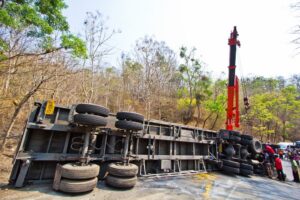 Commercial truck crash victims in Georgia may pursue three general categories of damages: economic, non-economic, and, in limited circumstances, punitive.
Economic damages compensate for financial losses with a measurable dollar value. These include emergency room charges, surgical costs, hospitalization, rehabilitation and physical therapy, prescription medication, diagnostic imaging, lost wages during recovery, loss of future earning capacity, vehicle repair or replacement, and the cost of any long-term or permanent medical care the injury will require. Truck crashes frequently produce catastrophic injuries that require multiple surgeries, long rehabilitation periods, and substantial modifications to the home. Establishing the full scope of future treatment typically requires medical testimony and, in the most serious cases, a life care plan.
Non-economic damages address losses that do not generate receipts. Physical pain and suffering, emotional distress, loss of enjoyment of life, permanent scarring, mobility limitations, and the psychological effects of a traumatic crash all fall within this category. A method for calculating compensation in truck accident cases frequently requires analysis of how injuries will affect the client’s career, family life, and independence over the rest of the client’s lifetime.
Punitive damages may be available in cases involving particularly reckless or willful conduct. Common examples in trucking matters include driving under the influence, knowingly operating with defective equipment, falsifying hours-of-service records, and dispatching drivers in violation of duty cycle limits. Georgia law caps punitive damages at $250,000 in most cases under O.C.G.A. § 51-12-5.1, though the statute contains several exceptions that can expand the available recovery, including cases involving driving under the influence.
Georgia law distinguishes between special and general damages when valuing a case, and both categories apply in trucking matters. The difference can be substantial in catastrophic cases, where non-economic damages often exceed the direct medical expenses.
Commercial insurance frequently provides coverage across multiple layers. The primary liability policy of the carrier is the first source of recovery. Excess and umbrella policies often sit above that primary layer. Separate policies may cover the tractor and the trailer when owned by different parties. In some cases, a claim may also lie against the shipper, the broker, the loading contractor, a maintenance provider, or a vehicle manufacturer. In crashes involving an employee operating a personal vehicle on company business, the employer’s general liability coverage may also apply.
What Steps Should I Take After a Truck Accident?
 The actions taken in the first hours and days after a truck crash can significantly affect the outcome of a case. The 10 steps below are those our firm recommends to every client.
- Accept emergency medical evaluation at the scene. Truck crashes produce high-energy impacts. Even when injuries appear minor, internal bleeding, concussion, and spinal injuries often present hours or days later. A same-day evaluation creates a medical record tied to the date of the crash.
- Call 911 to report the crash. A commercial truck crash must be reported. The responding officer’s report becomes central to the case. Certain crashes must also be reported to the FMCSA under federal accident register requirements.
- Do not move vehicles unless safety requires it. The position of the vehicles at rest is often a key piece of evidence in a commercial crash. If the vehicles can be left in place safely, photograph their positions before they are moved.
- Document the scene when safely possible. Photograph both vehicles from multiple angles, the position of each vehicle in the roadway, visible damage, cargo that has fallen, skid marks, debris fields, traffic controls, and weather conditions. Also photograph the DOT number, license plate, and any company markings on the truck.
- Obtain the driver’s information and the carrier’s identity. Collect the driver’s name, contact information, commercial driver’s license number, and the carrier’s name, DOT number, and MC number. Insurance information is typically printed on the cab or available from the driver.
- Identify witnesses. Independent witness accounts frequently determine contested cases. Obtain the name and phone number of every person who observed the crash.
- Preserve your vehicle in its post-crash condition. Black box data from your own vehicle can be critical evidence. Do not authorize repairs before a qualified expert has inspected the vehicle.
- Contact an attorney immediately. Truck accident cases involve short evidence preservation windows. Carrier policies permit routine destruction of driver logs, dispatch records, maintenance files, and ELD data on rolling cycles. A timely spoliation letter from counsel preserves the evidence needed to prove the case.
- Avoid posting about the crash on social media. Photographs, location check-ins, and commentary can all be used against your claim by defense counsel and insurers.
- Do not give a recorded statement before consulting counsel. Adjusters and carrier representatives contact injured parties quickly. A recorded statement given without counsel is one of the most common ways injured parties harm their own claims.
Preserving evidence in truck cases is particularly urgent. Commercial carriers often send rapid-response teams to major crash scenes within hours. Those teams photograph, measure, and collect evidence to support the carrier’s defense long before an injured party has time to retain counsel.
Truck Accident Statistics in East Point
 Available data demonstrates that commercial vehicle crashes have increased significantly over the past decade, and Georgia’s position as a major freight corridor places residents at elevated risk.
According to the Federal Motor Carrier Safety Administration, more than 500,000 crashes involving large trucks and buses occur nationwide in a typical reporting year. Fatal truck crashes have risen substantially over the past decade, and the overwhelming majority of deaths in these crashes are occupants of the smaller vehicle rather than the truck.
The National Highway Traffic Safety Administration reports that large truck occupants account for a small fraction of total crash deaths despite the high number of truck-involved collisions. The disparity reflects the size and mass advantage trucks hold in any collision with a passenger vehicle.
The Georgia Governor’s Office of Highway Safety tracks commercial vehicle crashes as part of its annual crash data reporting. Georgia records tens of thousands of crashes involving commercial motor vehicles each year, with Interstate 285 and the surrounding commercial corridors producing a disproportionate share of serious injury cases.
The Georgia Department of Transportation publishes detailed freight corridor data. Interstate 285 carries an exceptionally high volume of commercial truck traffic, and the section of the perimeter serving Hartsfield-Jackson Atlanta International Airport sees concentrated freight activity due to cargo operations, warehousing, and distribution centers.
The U.S. Department of Transportation identifies Atlanta as one of the nation’s most significant freight hubs. East Point sits within this hub and borders the airport’s cargo complex. Camp Creek Parkway, Roosevelt Highway, and the industrial corridors along Cleveland Avenue see sustained commercial vehicle volume.
The Insurance Institute for Highway Safety notes that large trucks are involved in a disproportionately high share of fatal multi-vehicle crashes. Underride collisions, where a passenger vehicle slides under the trailer, account for a significant number of fatal outcomes.
The Bureau of Transportation Statistics reports that driver-related factors, including distraction, impairment, fatigue, and speeding, contribute to the majority of large truck crashes. Commercial driver fatigue remains a leading concern despite hours-of-service regulations and electronic logging device mandates.
East Point Truck Accident Lawyer FAQs
 How much does a truck accident lawyer in East Point, GA cost?
Our firm accepts cases on a contingency fee basis. There is no upfront fee and no hourly billing. The client pays a percentage of the recovery only if compensation is obtained. If no recovery is made, no fee is owed.
Do you offer free consultations?
Yes. Every truck accident consultation with our firm is provided at no cost. We review the facts of the crash, answer your questions, and offer a candid assessment of whether the claim is viable.
How long do I have to file a truck accident lawsuit in Georgia?
Two years from the date of the injury. This is the general personal injury statute of limitations in Georgia. Property damage claims are governed by a four year deadline. Truck cases frequently involve short evidence preservation windows, and waiting weeks or months to contact counsel can permit the carrier to destroy driver logs, ELD data, and maintenance records on routine schedules.
Why are truck accident cases different from car accident cases?
Truck cases differ from car accident cases in several respects. The injuries are typically more severe. The liability analysis extends beyond the driver to the carrier, the owner of the tractor, the owner of the trailer, the shipper, the broker, and the maintenance provider. The governing law includes the Federal Motor Carrier Safety Regulations in addition to state law. The insurance limits are substantially higher. And commercial carriers deploy rapid-response teams to major crash scenes that no individual driver would use in a passenger car collision.
Who can be held liable in a truck accident case?
Potentially liable parties include the truck driver, the trucking company, the owner of the tractor when separately owned, the owner of the trailer when separately owned, the shipper, the loading contractor, the broker, the maintenance provider, and the manufacturer of any defective component.
What is a spoliation letter and why does it matter?
A spoliation letter is a formal demand that a carrier preserve specific categories of evidence pending litigation. Routine carrier retention policies often permit destruction of driver logs, dispatch records, maintenance files, and electronic data on short cycles. A prompt spoliation letter from counsel forces preservation and prevents the destruction of evidence that can determine the outcome of the case.
Can I recover if I was partially at fault for the crash?
Georgia’s modified comparative negligence rule permits recovery when the plaintiff is less than 50 percent at fault. Any recovery is reduced by the plaintiff’s share of fault. Trucking insurers routinely attempt to shift fault onto the injured driver, and an early recorded statement can provide them with language to work with.
What if the truck driver had no license or inadequate training?
Federal and state law require commercial drivers to hold a valid commercial driver’s license with the proper endorsements for the vehicle and cargo being transported. A carrier that permits an unlicensed or improperly trained driver to operate a commercial vehicle faces direct negligence liability in addition to vicarious liability for the driver’s conduct.
What if the truck driver was fatigued?
Federal hours-of-service rules cap the number of consecutive hours a commercial driver may operate before mandatory rest. Violations of those rules are common and frequently cited in serious crashes. Electronic logging device records, dispatch data, fuel receipts, and toll records can establish the driver’s duty status in the hours before the crash.
What if the trucking company tries to settle quickly?
Rapid settlement offers in truck cases are almost always inadequate. Carriers issue early offers before the injured party understands the full scope of medical treatment, lost income, and long-term impact. Accepting a quick settlement typically forecloses any additional recovery, even when later complications arise.
Will my case go to trial?
Most truck accident cases resolve before trial. Our firm prepares every matter as though it will be presented to a jury, and that approach strengthens our position during settlement negotiations. When a carrier refuses to offer fair value, we are prepared to try the case.
Can I recover for emotional trauma from a truck crash?
Yes. Post-traumatic stress, anxiety around driving, sleep disturbances, and depression are all legally compensable. Mental health treatment records help substantiate these elements of the claim.
What if a family member was killed in a truck crash?
Surviving family members may pursue both a wrongful death claim and a survival action. The wrongful death claim compensates for the loss of the decedent’s life. The survival action compensates the estate for the decedent’s medical expenses, conscious pain and suffering before death, and funeral costs. Both claims are subject to strict statutory procedures.
What if the truck was from out of state?
Most commercial trucks operating in Georgia cross state lines. Out-of-state carriers remain subject to Georgia jurisdiction when the crash occurs in Georgia. Federal regulations apply to interstate carriers regardless of the state of origin.
How long does a truck accident case take?
The timeline depends on the severity of the injury, the complexity of liability, and the carrier’s negotiation posture. Straightforward cases may resolve in several months. Matters involving severe injury, disputed fault, or multiple defendants typically require a year or longer. Our firm works to move cases as quickly as the evidence and the client’s medical recovery permit.
Most Dangerous Locations for Truck Accidents in East Point
 East Point sits in south Fulton County and borders one of the nation’s busiest cargo complexes. The locations below represent those most commonly associated with serious truck crashes in the area.
- Interstate 285 through East Point. The perimeter carries exceptionally high commercial truck volume, with heavy merging traffic at multiple interchanges. Rear-end, sideswipe, and jackknife incidents are common on this stretch.
- Camp Creek Parkway. The corridor serves airport cargo facilities, distribution centers, and industrial sites. Commercial truck traffic is sustained throughout the day.
- Roosevelt Highway and the airport cargo complex approaches. Truck traffic serving Hartsfield-Jackson cargo operations concentrates along Roosevelt Highway. Intersections with passenger vehicle arterials produce frequent conflicts.
- Interstate 75 and Interstate 85 downtown connector approaches. The approaches to downtown Atlanta from the south carry significant combination vehicle traffic. Lane changes and merge-related crashes are common during peak commuter periods.
- Cleveland Avenue corridor. The arterial serves commercial and industrial properties and carries steady delivery and local trucking activity.
- Washington Road and Main Street intersections. The downtown East Point corridor sees mixed passenger and commercial vehicle traffic with signalized control, producing frequent intersection crashes.
These descriptions reflect publicly reported crash patterns. Case strategy depends on the specific facts of each incident.
What Are Important Local Resources for East Point Truck Accident Victims?
 The following resources may be of use to people injured in an East Point truck accident. Council & Associates does not endorse and has no affiliation with the organizations listed below. They are provided for reference only.
- East Point Police Department. (404) 761-2177. Responds to commercial vehicle crashes within city limits and prepares incident reports.
- Georgia State Patrol Motor Carrier Compliance. Investigates commercial vehicle crashes on state routes and interstates and conducts regulatory enforcement against carriers.
- Grady Memorial Hospital. (404) 616-1000. The nearest Level I trauma center for catastrophic truck crash injuries.
- Wellstar Atlanta Medical Center South. Provides emergency and acute trauma services for the East Point area.
- Federal Motor Carrier Safety Administration Complaint Portal. Allows submission of complaints against carriers and drivers for safety violations.
- Georgia Department of Public Safety. Regulates commercial motor carriers operating in Georgia and maintains driver and vehicle compliance records.
Preserve copies of any reports filed with law enforcement, medical providers, or your insurance carrier. These records frequently serve as the evidentiary foundation of a strong truck accident claim.
Contact Council & Associates
 A commercial truck crash can result in lasting physical injury, significant loss of income, and long-term emotional consequences. No injured person should be left to bear those costs alone. Our attorneys provide a complimentary initial consultation to review the facts of your case, explain your rights under Georgia and federal law, and outline the available legal options. No fees are owed unless compensation is recovered.
Contact us to speak with an attorney who handles commercial truck accident matters. We respond promptly because physical evidence and carrier records in these cases can be lost within days following the collision.
Stay In The Know
View our latest legal updates.
Case Results Millions Recovered For Our Clients
$1,750,000
Tractor Trailer Settlement
Our client was crossing one of the busier intersections in Atlanta when a negligent truck driver struck them unexpectedly, suffering a broken hand and leg fracture. We secured a seven-figure settlement for our client’s pain and suffering.
$550,000
Car Accident
Client was driving when their vehicle was overturned by a truck, leaving the client with broken ribs. After hard litigation, our firm won over a half-million dollar settlement for our client’s medical bills and suffering.
$300,000
Commercial Truck Accident
Our client was driving in Atlanta when a commercial truck struck them. The truck driver’s negligence resulted in a left shoulder injury. Following a brief round of negotiations, we were able to settle on a six-figure settlement for our client’s injuries.
Contact Us
To schedule your free initial consultation, complete the contact form below.
Phone Number | (404) 526-8857
24/7 Call Answering